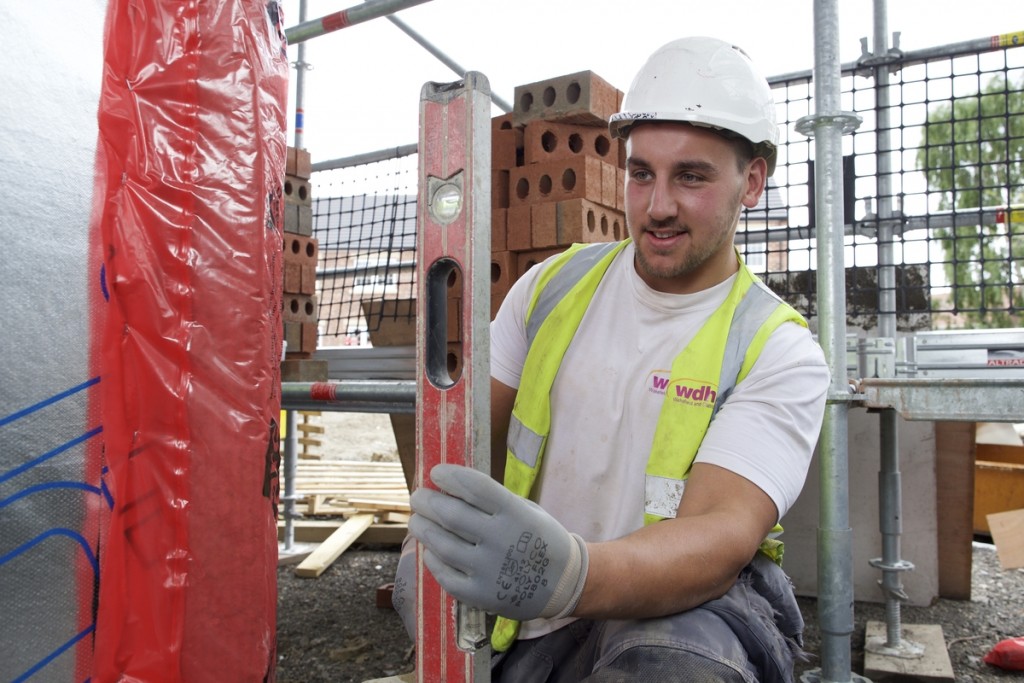
Housebuilding is becoming a key battleground at this general election, with both Theresa May and Jeremy Corbyn having now set out pledges to build many more homes, including via councils and housing associations. The national housing crisis dictates this should be an election priority, but there is way too little recognition so far of the acute need to address specific housebuilding issues in the north. So here, I want to set out how the next prime minister can and must help drive much faster progress on this front.
First, a mention of the recent election of the new Metro Mayors, as this new tier of regional power could just be the most important tool for turning the parties’ election pledges on housing to actual delivery. The likes of Andy Burnham, for example, at Greater Manchester, and Steve Rotheram, at the Liverpool City Region, gain significant powers over housing, and while at Tees Valley, Ben Houchen, is yet to gain as much autonomy, he still has a decent level of influence.
I believe this regional focus for delivery is way overdue. There has been growing concern that, outside the south east’s dire situation of housing need, other regions are heading the same way. In the north, current estimates are that 50,000 new homes need to be built each year just to keep pace with current demand. And while there is little hard evidence so far, if the Government’s intent to ‘rebalance the economy’ by helping to spur growth in the region bears fruit, this shortfall will rise even further as more people move to work in the region.
Our own recent research underlines the importance of this issue. We calculate that the north has suffered a ‘brain drain’ of over 300,000 highly-skilled young workers and graduates migrating south over the last decade. And this is not just down to a relative lack of job opportunities, as significant migrant labour from outside the UK has in fact filled the many highly-skilled jobs that become available. Our evidence is that other factors, including good quality housing and better transport infrastructure, are key to retaining northern talent.
This all presents a challenge to the new Metro Mayors in the north to help deliver much more housebuilding, not just to meet local demand, but as a means to promote and sustain growth in their areas. The biggest issue will be wrestling much faster local consensus for development and this will be one of their most important roles, especially as northern local authorities are relatively more pro-housebuilding than their southern counterparts. They will still have to collaborate though with councils of different political outlooks, such as in Tees Valley, where a Conservative mayor was elected into a rock solid Labour heartland.
This is where national government needs to help the regional tiers of power to really make progress and H4N is calling for a strategy which we believe will accelerate housebuilding radically.
First, we need to impress on every decision-maker the seriousness of the housebuilding challenge and believe that official, regional-level housing targets are now needed, in addition to the national one, and embedded in the Government’s Infrastructure Strategy. We will soon publish new research setting out our estimates for the north.
Then we need to think much more collaboratively and imaginatively about delivery and Metro Mayors should lead the charge. The recent housing white paper made it clear that a more diverse market is needed and we agree. Housing associations, such as those that make up the membership of Homes for the North already play a substantial role in delivering new housing. Our 19 members expect to deliver 15,000 net additional new homes between their development and regeneration works over the next 3 years – but that figure could be expanded radically within the right policy environment.
To help all home builders to accelerate their output, we want to see the creation of new vehicles to speed up place-based development, which we are calling ‘homes and enterprise zones’. These would be modelled on the successful ‘Pink Planning Zones’ in the US which simplify the planning process – not on a huge scale which might cause concern, but in specific, targeted areas of real housing need. They would also, however, add in the kinds of financial incentives used in economic enterprise zones, specifically for housing – such as tax cuts for redeveloping commercial sites for housing, or for new offsite manufacturing methods which can build homes at scale, very rapidly.
The role of combined authorities and mayors would be to help identify these zones, broker local consensus over development and to bring deals together. Housing Development Orders could be used to develop brownfield sites across a combined authority and we would like to see funds from the £3 billion Home Building Fund allocated to the North to address the market failure in housebuilding in many areas.
Lastly, there is a need for specific action to help housing associations take the leading role they could play in delivering more housing from a more diverse market. The big issue is rent certainty: housing association rents are currently capped by government, with a pre-election promise of a review in 2020. The uncertainty is making it difficult for the sector to attract development investment and what we need is a situation allowing efficient housing associations to strike more flexible rent deals that allow them to better tailor rents to local market conditions and also provide the certainty investors need.
All this is relatively straightforward to deliver in practical terms, but could turbo-charge the rate of new build in areas that need it most. What we need is simply the political will to see it through – whoever wins the election on 8th June.